
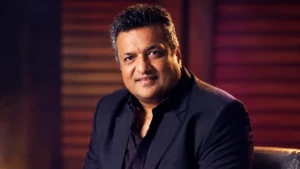
From the crime drama Kaante to action thrillers such as Shootout at Wadala, the director built a recognisable place in Hindi cinema through intense storytelling, memorable collaborations and stylised filmmaking.
Sanjay Gupta, the Hindi film director, screenwriter and producer known for Kaante, Zinda, Shootout at Wadala and Kaabil, died on October 30, 2026, at his Mumbai residence after reportedly sustaining a head injury in a fall. His death was confirmed by filmmaker Ashoke Pandit through an Instagram tribute.
The Sanjay Gupta Filmmaker journey covered more than three decades of Hindi cinema. He developed a distinct identity through crime thrillers, action dramas and films featuring prominent actors. His association with Sanjay Dutt and his work under White Feather Films also became important parts of his career.
Although his filmography included different genres, audiences largely associated him with stories involving crime, revenge, power struggles and intense action.
What happened to Sanjay Gupta?
Sanjay Gupta died on October 30, 2026, following a reported fall at his residence in Mumbai. According to reports, he sustained a head injury, and the Versova Police registered an Accidental Death Report (ADR) to investigate the circumstances.
However, reports published on October 31 differed over the exact location of the fall. Some accounts referred to the bathroom, while police-related reporting also mentioned a suspected fall in the kitchen. Therefore, the precise circumstances should not be treated as conclusively established.
The police said that they had not found anything suspicious at the initial stage of the investigation. Further details were awaited.
Filmmaker Ashoke Pandit shared an emotional tribute on Instagram after learning about Gupta’s death. He remembered him as a passionate filmmaker, a wonderful storyteller and a person full of life. Pandit also offered condolences to his family and close associates.
Actor and commentator Kamaal R. Khan also mourned his death, remembering Gupta for his knowledge and personality.
There were conflicting age references in reports published on October 31, with some identifying him as 57 and others as 59. His age has therefore been omitted here rather than presenting a disputed figure as confirmed information.
How did Sanjay Gupta begin his filmmaking career?
Born in Mumbai, Gupta developed an interest in filmmaking at an early age. Before becoming a director, he worked in post-production and sound design. He also assisted filmmaker Pankaj Parashar on projects such as the television series Karamchand and the film Jalwa.
He made his directorial debut with Aatish: Feel the Fire in 1994. The action drama featured Sanjay Dutt, Aditya Pancholi and Raveena Tandon.
Gupta subsequently directed Ram Shastra (1995), Hameshaa (1997), Khauff (2000) and Jung (2000). These projects gave him experience in mainstream action and drama before he moved towards the crime-thriller style that became closely associated with his work.
His collaboration with Sanjay Dutt also developed into a recurring professional association, resulting in several films over the years.
Why did Kaante become an important film in his career?
Released in 2002, Kaante remains one of the most recognisable films in the Sanjay Gupta Filmmaker filmography.
The crime drama featured Amitabh Bachchan, Sanjay Dutt, Suniel Shetty, Mahesh Manjrekar, Lucky Ali and Kumar Gaurav. Its story followed six criminals who came together to plan a bank robbery in Los Angeles.
The film attracted attention for its ensemble cast, dramatic confrontations and stylised presentation. It also became an important project in Gupta’s career as a director and producer.
Kaante received recognition during the 2003 awards season, including Filmfare nominations for Best Film and Best Director. It also received the IIFA technical award for Best Special Effects (Visual).
The film helped establish Gupta’s association with large-scale crime dramas and remained a notable title in his career.
Which Sanjay Gupta films are worth remembering?
Beyond Kaante, Gupta directed and produced several projects that explored crime, action, suspense and personal relationships.
1. Musafir (2004)
Starring Sanjay Dutt, Anil Kapoor and Sameera Reddy, Musafir combined crime, suspense and dramatic storytelling. Gupta directed and produced the film.
2. Zinda (2006)
Featuring Sanjay Dutt, John Abraham, Lara Dutta and Celina Jaitly, Zinda was a psychological thriller. The film was an adaptation of the South Korean movie Oldboy and explored revenge, captivity and personal suffering.
3. Shootout at Lokhandwala (2007)
Gupta produced this crime drama, which drew inspiration from the 1991 Lokhandwala Complex shootout in Mumbai. The film featured Amitabh Bachchan, Sanjay Dutt and Vivek Oberoi.
It is important to distinguish this project from Shootout at Wadala, which Gupta directed.
4. Shootout at Wadala (2013)
Starring John Abraham, Anil Kapoor and Tusshar Kapoor, this crime drama explored another chapter of Mumbai’s underworld history. The film continued Gupta’s association with stories inspired by real-life criminal events.
5. Jazbaa (2015)
Featuring Aishwarya Rai Bachchan and Irrfan Khan, Jazbaa presented a legal thriller involving a lawyer who faces a difficult situation concerning her daughter.
6. Kaabil (2017)
Starring Hrithik Roshan and Yami Gautam, Kaabil followed a visually impaired man who pursues justice after a personal tragedy. The film explored revenge, resilience and the struggle for justice.
7. Mumbai Saga (2021)
Featuring John Abraham and Emraan Hashmi, Mumbai Saga returned to the changing underworld of Mumbai. Its story explored crime, power struggles and the city’s transformation.
What made Sanjay Gupta’s filmmaking style recognisable?
The Sanjay Gupta Filmmaker identity became closely associated with stylised action, crime-driven narratives and urban settings. His films frequently featured gangsters, police officers, revenge plots and conflicts involving power.
His presentation also relied on dramatic lighting, background scores, character-focused scenes and action sequences. These elements helped create a recognisable visual approach across several of his projects.
Gupta’s work as a producer also contributed to his career. White Feather Films, a production banner launched in April 2000 as a joint venture involving Sanjay Dutt, Gupta and Bobby Anand, backed projects including Kaante.
His collaborations with actors such as Sanjay Dutt and John Abraham also became recurring features of his filmography.
What was Sanjay Gupta’s last directorial film?
One of Gupta’s final directorial projects was The Miranda Brothers, starring Harshvardhan Rane and Meezaan Jafri. The sports drama premiered on JioCinema on October 25, 2024.
The film followed two brothers who shared an interest in football. Their relationship faced challenges after the suspicious death of their mother.
Gupta also directed Visfot, featuring Riteish Deshmukh and Fardeen Khan, which was released in 2024.
These projects showed that his filmmaking interests extended beyond the gangster and crime stories that audiences commonly associated with him.
Why does Sanjay Gupta’s film legacy matter?
Gupta’s career reflected an important part of mainstream Hindi cinema’s crime and action genre. Films such as Kaante, Zinda and Shootout at Wadala brought together ensemble casts, urban settings and stories built around crime, revenge and power.
His work as a director, producer and screenwriter also gave him a presence beyond individual film releases. Through White Feather Films and his collaborations with established actors, he remained involved in different aspects of film production.
For audiences familiar with his movies, his filmography offers a look at how Hindi crime thrillers and action dramas developed across different periods.
His death on October 30 has brought renewed attention to a career that began with Aatish: Feel the Fire and continued through projects such as Kaabil, Mumbai Saga and The Miranda Brothers.
You may like to read: Yash’s Ramayana LA Premiere Speech Puts Kannada Cinema in Focus

