
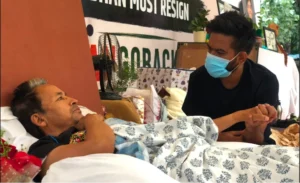
Delhi Police shifted Sonam Wangchuk to Safdarjung Hospital after his 21-day hunger strike, citing medical advice and court directions, while his family questioned treatment without consent.
People are eager to know about Sonam Wangchuk health updates, who has been on hunger strike for 21 days. Climate activist and education reformer Sonam Wangchuk was shifted from Jantar Mantar to VMMC and Safdarjung Hospital in New Delhi on Saturday after completing 21 days of an indefinite hunger strike. According to Delhi Police, the decision was taken following medical advice and directions issued by the Delhi High Court to ensure continuous monitoring of his deteriorating health.
The hospitalisation also triggered fresh debate after his family raised concerns over treatment consent, making the Sonam Wangchuk health update one of the most discussed developments surrounding the ongoing protest.
Why was Sonam Wangchuk shifted to the hospital?
According to Delhi Police, medical experts recommended immediate hospitalisation as Wangchuk’s health weakened after more than three weeks of fasting. The intervention was also linked to court directions that required authorities to monitor his condition and act if necessary.
Police personnel reached Jantar Mantar early on Saturday morning and shifted Wangchuk to Safdarjung Hospital. The move led to brief protests and sloganeering at the site before security personnel cleared the area.
What did Gitanjali J Angmo say about husband Sonam Wangchuk health update?
According to doctors treating him at Safdarjung Hospital, Wangchuk is stable but remains physically weak because of prolonged fasting and dehydration. As per the current Sonam Wangchuk health update, he continues to remain under medical observation.
Gitanjali J Angmo, wife of Sonam Wangchuk, reportedly objected to medical procedures being carried out without his consent and sought assurance that treatment would be administered only after obtaining his approval.
What did Abhijit Dipke say after Sonam Wangchuk was shifted?
Following Wangchuk’s removal from the protest site, supporters criticised the police action. Cockroach Janta Party founder Abhijit Dipke announced an indefinite hunger strike in solidarity with Sonam Wangchuk and alleged that peaceful protesters were targeted during the operation. Delhi Police, however, denied allegations of using force against demonstrators.
The incident also drew political reactions, with opposition leaders criticising the handling of the protest, while authorities maintained that the intervention was solely aimed at protecting Wangchuk’s health in accordance with medical advice and court directions.
Why was Sonam Wangchuk on a hunger strike?
Sonam Wangchuk began his indefinite hunger strike on June 28 over demands related to examination reforms, transparency and accountability. The protest continued at Jantar Mantar for 21 days before authorities intervened after medical experts expressed concern over his health.
What happens after a prolonged hunger strike
Medical monitoring becomes increasingly important when a person continues fasting for an extended period, as prolonged food and fluid deprivation can affect hydration, energy levels and normal bodily functions. The need for medical supervision can therefore increase even when a person’s condition does not initially appear critical.
In such situations, doctors may monitor vital signs and other health indicators to assess whether further intervention is necessary. The exact treatment depends on the individual’s medical condition and the findings of healthcare professionals. A hospital setting also allows clinicians to provide continuous observation if complications develop.
For a protester, however, hospitalisation can become a sensitive issue because it may affect the person’s ability to continue the chosen form of protest. This can create a difficult balance between respecting an individual’s decisions and responding to medical concerns. In Wangchuk’s case, the disagreement over the hospital transfer added another dimension to an already politically sensitive protest.
Why consent and medical decisions became part of the debate
The hospitalisation also brought the question of medical consent into public discussion. Consent is an important principle in healthcare, although the circumstances surrounding medical intervention can become more complicated when authorities believe there is an immediate risk to a person’s health.
The controversy therefore involves two separate issues: the medical assessment of Wangchuk’s condition and the question of how treatment decisions should be handled during a protest. Authorities have maintained that the intervention followed medical advice and court directions, while concerns raised by his family focused on consent.
Keeping these issues separate is important when reporting the development. A hospital transfer does not by itself establish that treatment was forced or that any legal provision was violated. Those questions depend on the specific medical records, court directions and circumstances surrounding the intervention. As the matter continues to attract political attention, official statements and court records remain important for establishing the verified sequence of events.

