
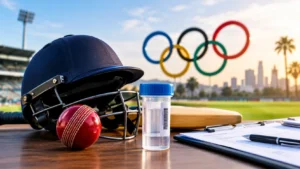
Cricket’s Olympic comeback brings tighter anti-doping expectations for the ICC, while India remains in WADA’s highest scrutiny category.
The International Cricket Council (ICC) has reportedly moved from Tier 2 to Tier 1 under the World Anti-Doping Agency’s (WADA) prioritisation framework, ahead of cricket’s return to the Olympic Games at Los Angeles 2028. The reported new classification is scheduled to take effect on January 1, 2027. India, meanwhile, remains in the highest scrutiny category under the reported country-level anti-doping prioritisation framework.
The ICC WADA Tier 1 upgrade concerns the international governing body’s anti-doping compliance responsibilities. It puts more emphasis on effective doping tests, proper handling of violations and medical exemptions for athletes. For cricket, the reported development comes as the sport prepares for its Olympic return after more than a century.
The meaning of ICC WADA Tier 1 upgrade
WADA uses a tier-based system to prioritise compliance monitoring of organisations that follow the World Anti-Doping Code. Its compliance framework covers international sports federations, national anti-doping organisations and major event organisations, although the applicable requirements differ by category.
The ICC previously held Tier 2 status, according to the reported classification. The ICC WADA Tier 1 upgrade comes ahead of cricket’s inclusion in the Los Angeles 2028 Olympic programme.
The classification reflects the prioritisation framework applicable to the organisation. The revised classification does not, on its own, point to an increase in doping cases in cricket or establish that the ICC has breached anti-doping regulations.
Under the reported revised classification, the ICC would face the compliance expectations associated with Tier 1 international federations. These requirements aim to strengthen anti-doping systems and ensure that organisations address identified compliance gaps within prescribed timelines.
The reported effective date is January 1, 2027.
Why is cricket’s Olympic return important?
Cricket will return to the Olympic programme at the Los Angeles 2028 Games, marking its first appearance at the event in 128 years. The sport last featured at the Olympics in 1900, and its return will give cricket greater visibility on an international sporting platform.
The Olympic stage also brings renewed attention to fair play and sporting ethics. Players must adhere to anti-doping rules, while sports governing bodies are responsible for maintaining testing systems and disciplinary processes that comply with international standards.
The ICC’s role in WADA’s Tier 1 category relates to these broader regulatory responsibilities. The classification places emphasis on the governing body’s role in maintaining dependable drug-testing procedures and ensuring that suspected anti-doping violations are assessed fairly under the established rules.
For cricket fans, the reported upgrade is primarily an administrative and governance development. The change does not directly affect match formats, player selection criteria or the outcomes of past competitions. Rather, it is related to the regulatory processes and safeguards that can ensure fairness and integrity in the sport.
What stricter anti-doping requirements will the ICC face?
The reported ICC WADA Tier 1 upgrade would bring greater scrutiny of compliance with the International Standard for Code Compliance by Signatories, where applicable.
The standard provides various kinds of corrective-action timelines according to the priority of a compliance requirement:
- Critical requirements: Corrective action is generally required within three months.
- High-priority requirements: Corrective action is generally needed within six months.
- General requirements: Corrective action is generally required within nine months.
These timelines relate to the applicable compliance framework and the correction of identified shortcomings. They should not be interpreted as new deadlines introduced exclusively for the ICC unless the relevant classification notice confirms that connection.
Testing procsses are one part of anti-doping regulations. Organisations must also address whereabouts failures, investigate potential anti-doping rule violations and provide fair hearings within the applicable procedures and timelines.
Therapeutic use exemptions, commonly known as TUEs, allow athletes to use certain otherwise prohibited substances or methods when they meet the applicable medical criteria and receive the required authorisation.
These provisions help distinguish legitimate medical treatment from prohibited use while protecting athletes’ rights.
The classification comes against the backdrop of ongoing efforts to address and reduce doping in global sports. However, a country’s inclusion in a particular priority category does not suggest that every athlete representing it has violated anti-doping regulations. The designation shows the level of oversight assigned under WADA’s established framework.
For Indian sports, the development points to the importance of consistent drug testing, educating athletes about anti-doping rules, conducting investigations without unnecessary delays and meeting international compliance requirements.
How could the ICC WADA Tier 1 upgrade affect Indian cricketers?
The ICC WADA Tier 1 upgrade does not automatically mean that all Indian cricketers will be subjected to more frequent drug tests or face new individual restrictions from January 1, 2027. The actual implications depend on the specific obligations associated with the ICC’s revised classification.i
Why does India remain in WADA’s top scrutiny category?
India remains in the highest tier under the reported country-level anti-doping prioritisation framework. This classification is separate from the international federation classification reportedly assigned to the ICC. The two systems assess different entities and should not be treated as interchangeable.
WADA determines a country’s monitoring priority by considering factors such as its population and results at major senior-level international sporting competitions over the past four years. Olympic Games and World Championships performances form part of the evaluation, while more recent results receive greater importance under the relevant assessment criteria.
The reported development places India in the highest prioritisation category alongside countries such as China and the United States. However, India’s current classification should be verified against the latest official WADA list before publication.
The reclassification relates to the International Cricket Council’s responsibilities as an international sports governing body. Its practical implications will depend on the specific compliance requirements that apply to the ICC and how the organisation implements them.
The ICC already has an anti-doping programme based on the World Anti-Doping Code. The programme covers doping controls, the management of potential violations and measures to protect the integrity of cricket.Indian players competing internationally must continue to follow the applicable anti-doping rules. Athletes may also need to comply with whereabouts requirements if they belong to a designated testing pool.
For players, the central concerns remain compliance with the prohibited list, accurate whereabouts information where required and the correct handling of medical exemptions.
For administrators, the ICC WADA Tier 1 upgrade increases the importance of meeting applicable compliance timelines and maintaining effective procedures.
What happens next before the 2028 Olympics?
The next phase will focus on the ICC’s compliance obligations and preparation for cricket’s Olympic competition.
If the reported classification and effective date are confirmed, the ICC will need to meet the requirements applicable to Tier 1 international federations. WADA’s compliance framework provides mechanisms for addressing shortcomings when signatories fail to meet specified obligations.
The classification change alone does not establish that the ICC has failed any requirement. Nor does it guarantee that every compliance issue has already been resolved. The relevant test will be whether the organisation meets the applicable standards.
India’s country-level status remains a separate matter under WADA’s prioritisation framework. Its classification reflects the agency’s applicable criteria rather than a new verdict against the Indian cricket team.
As cricket approaches Los Angeles 2028, anti-doping compliance will remain an important part of ensuring that players compete under consistent rules. The ICC WADA Tier 1 upgrade puts the governing body’s compliance responsibilities firmly in focus ahead of the Olympic tournament.
Also read: Harmanpreet Kaur steps down as India captain, what changes for women’s cricket now?

