
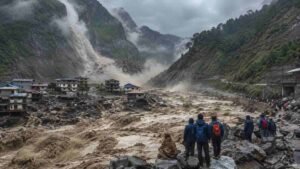
As Nepal searches for hundreds missing after a devastating Himalayan flash flood, PM Modi has spoken to Balendra Shah and offered India’s support for rescue efforts.
The Himalayan region is facing a major flood emergency after flash floods struck areas near the Nepal-China border on August 26. The Nepal floods 2026 disaster swept through settlements, damaged roads and bridges and left hundreds of people missing.
Reports on August 27 put Nepal’s death toll at 270, while hundreds of people remained missing as rescue teams continued searching affected areas. Nepal Foreign Minister Shisir Khanal said nearly 300 Indian nationals, mostly Manasarovar pilgrims, had been reported missing.
The disaster has severely affected travellers using routes towards the Kailash Mansarovar pilgrimage region. Rescue efforts remain difficult because flooding, debris and infrastructure damage have disrupted access to remote Himalayan areas.
A group of 31 pilgrims from Hyderabad, including former DRDO chief G. Satheesh Reddy and his wife, was also reported to have been affected. The group had crossed the flood affected area hours before the flash flood struck and later remained stranded in Saga. Reports said the group was safe.
The situation remains fluid as authorities continue to restore communication and establish contact with people in remote locations.
Why did the Nepal floods happen?
The latest Nepal floods 2026 disaster appears to have been caused by more than conventional monsoon flooding.
Early assessments pointed to an ice and rock collapse in the Himalayan region that generated a sudden surge of water, mud and debris. The event has been linked to glacial instability and an ice rock avalanche or landslide.
Such events can produce far more sudden flooding than a conventional rise in river levels. A large mass of ice, rock or debris can temporarily block a river. When that natural blockage gives way, a powerful surge can rush downstream, carrying water, mud and rocks with it.
The Bhote Koshi river system and areas near the Nepal-China border were among those affected. Floodwaters and debris damaged infrastructure and isolated communities.
Why does the monsoon still matter for Himalayan flood risks?
Nepal receives substantial rainfall during the South Asian monsoon. Heavy rain can raise river levels, saturate mountain slopes and increase the risk of landslides.
In mountainous areas, these conditions can lead to several dangers:
- Rivers can rise rapidly.
- Saturated slopes can become unstable.
- Landslides can block or divert waterways.
- Glacial lakes can pose additional risks.
- Damaged roads and bridges can isolate communities.
- Rescue teams can struggle to reach remote areas.
However, the current disaster should not be described simply as a conventional monsoon flood. The reported ice rock collapse and resulting debris surge appear to have played a major role.
What did PM Narendra Modi and Nepal PM Balendra Shah say About Nepal Floods 2026?
The devastating floods have also prompted a response from the leaders of India and Nepal as rescue and relief operations continue.
Prime Minister Narendra Modi spoke with Nepal Prime Minister Balendra Shah on August 26 and expressed condolences over the loss of lives caused by the floods. Modi said India stands in solidarity with the people of Nepal during the crisis and assured Shah that India is ready to provide all possible humanitarian assistance. Indian teams are also coordinating with Nepalese authorities on rescue and relief efforts.
Nepal Prime Minister Balendra Shah said the government’s immediate focus was on saving injured people, searching for those who remain missing and ensuring the safety of those affected by the disaster. He described the sudden flooding in the Bhotekoshi River area as a major shock for the country and called for continued attention to rescue, search and relief operations.
The statements come as authorities continue efforts to locate missing people, assist stranded travellers and restore access to areas affected by floodwater and debris.
Why are Himalayan flash floods so dangerous?
The geography of the Himalayas makes flash floods particularly dangerous. Mountain rivers often pass through narrow valleys, leaving little time for people downstream to respond when large volumes of water and debris suddenly enter the river system.
Unlike slowly rising floodwater, a flash flood can arrive with tremendous force. It can carry boulders, trees, mud and broken infrastructure, making roads and bridges unusable within a short period.
The latest Nepal floods have again exposed the vulnerability of communities and travellers in high altitude Himalayan regions. Scientists have also warned that changing glacier conditions can increase risks linked to glacier related hazards.
Is climate change linked to the Nepal floods?
Climate change should not be presented as the sole cause of this specific disaster without scientific attribution. However, scientists have warned that rising temperatures are changing Himalayan glaciers and can affect glacier retreat, unstable slopes and glacial lakes.
These changes can create conditions that increase the risk of certain glacier related hazards. However, that does not mean every Himalayan flood is directly caused by climate change.
For the current disaster, the immediate trigger is more closely linked to the reported ice rock avalanche and subsequent surge of water and debris.
What precautions should travellers take during floods in Nepal?
Travellers heading towards remote Himalayan and pilgrimage routes should closely follow official weather and emergency warnings.
Basic precautions include:
- Check official weather and route warnings before travelling.
- Avoid rivers, bridges and low lying areas during severe weather.
- Never attempt to cross moving floodwater.
- Follow evacuation instructions immediately.
- Keep phones, power banks, identification and essential medicines protected.
Pilgrimage groups should also maintain regular communication with tour operators and local authorities when travelling through remote areas.
What should people do if a flash flood starts suddenly?
The safest response is to move away from the water and towards higher, safer ground as quickly as possible.
People should avoid bridges, low lying roads and areas beneath unstable slopes. They should never attempt to cross fast moving floodwater.
If authorities issue evacuation instructions, people should follow them immediately rather than waiting to assess the situation themselves.
Even after the water recedes, damaged structures, debris and unstable slopes can remain dangerous. People should return to affected areas only after authorities declare them safe.
Why are pilgrims particularly affected?
The Nepal floods 2026 disaster has caused particular concern because the affected region is connected to routes used by pilgrims travelling towards Kailash Mansarovar.
Some sections of these routes pass through remote and mountainous terrain where transport and communication can already be difficult. The sudden flooding has further disrupted roads and access routes.
The reported number of missing Indian nationals has also increased concern among families waiting for information about relatives travelling through the region.
What makes rescue operations difficult in the Nepal floods 2026?
Rescue teams face major challenges after a Himalayan flash flood. Damaged roads can prevent emergency vehicles from reaching affected settlements, while landslides can create additional hazards.
Difficult terrain and poor visibility can also restrict helicopter operations. Search teams must work carefully because unstable slopes and damaged infrastructure may create secondary risks.
Authorities in Nepal and China are conducting search and rescue operations in affected areas, while Indian authorities are coordinating efforts concerning Indian nationals.
The number of missing people may continue to change as communication is restored and authorities verify reports from different locations.
What can people learn from the Nepal floods 2026?
The disaster offers a broader lesson about travelling and living in high risk mountain environments.
Flood preparedness cannot depend only on watching whether a river is rising. In the Himalayas, hazards can originate farther upstream through landslides, glacial events and sudden blockages.
Better early warning systems, reliable communication, safer infrastructure and monitoring of vulnerable glaciers and slopes can help reduce future losses.
For travellers, the message is simple: a route that was safe earlier in the day may not remain safe when weather and mountain conditions change rapidly.
The bigger warning behind Nepal’s latest flood disaster
These Nepal floods 2026 are not only an unfolding rescue emergency. They also demonstrate how quickly conditions can change across the Himalayas.
For communities, authorities and travellers, preparedness remains important because flash floods can leave very little time to respond. Better warning systems, stronger infrastructure and monitoring of high risk mountain areas can help reduce the impact of future disasters.
For now, the priority remains finding those still missing and safely evacuating people stranded in affected areas.
Also read: Why was Kriti Sanon’s Raksha Bandhan ad removed? GIVA breaks silence

