
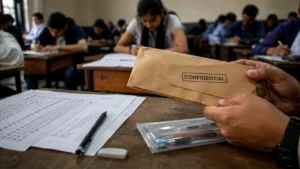
What is the Anti Paper Leak Law? It is India’s strengthened legal measure to stop organised exam fraud, protect honest candidates and improve the credibility of public examinations.
India has taken another significant step towards securing the integrity of competitive examinations with the passage of the anti paper leak law through Parliament. The amended legislation strengthens the legal framework against organised paper leaks and examination fraud, aiming to ensure that students and job aspirants receive a fair opportunity based on merit.
Prime Minister Narendra Modi described the move as an important reform for the country’s education and recruitment system, stating that the government remains committed to protecting the future of young people from exam-related malpractices.
What is the anti paper leak law?
The legislation is formally known as the Public Examinations (Prevention of Unfair Means) Amendment Bill, 2026. It amends the 2024 law that was introduced to tackle organised cheating and paper leak networks affecting public examinations across India.
The law applies to major public examinations conducted by central authorities, including recruitment and entrance examinations notified under the Act. It focuses on organised criminal activities rather than penalising genuine candidates who become victims of paper leak incidents.
Why was the law strengthened?
Over the past few years, several high-profile paper leak incidents have raised concerns about the credibility of recruitment and entrance examinations. Such incidents often lead to cancelled exams, delayed recruitment processes and uncertainty for lakhs of candidates.
The amended anti paper leak law seeks to deter organised exam fraud by introducing tougher enforcement measures and strengthening investigation mechanisms.
What has changed from the 2024 law?
The 2026 amendment builds upon the Public Examinations (Prevention of Unfair Means) Act, 2024 by strengthening provisions aimed at tackling organised examination fraud. The government has said the revised law enhances the legal framework to deal more effectively with paper leak rackets and other unfair practices while protecting genuine candidates.
Key features of the amended anti paper leak law
The amended legislation introduces several important provisions, including:
- Tougher punishment for individuals and organised groups involved in paper leak offences.
- Stronger legal action against organised examination fraud networks.
- Faster investigation and prosecution of serious examination-related offences.
- Measures intended to improve transparency and restore public confidence in government examinations.
- Greater protection for honest students and job aspirants who prepare for competitive examinations.
PM Modi’s message on exam reforms
Following Parliament’s approval of the Bill, Prime Minister Narendra Modi said the strengthened law reflects the government’s commitment to creating a more credible examination system.
In a video message, he said the future of students would not be compromised by paper leak mafias and reaffirmed the government’s zero-tolerance approach towards examination fraud.
CJP calls the law a step towards cleaner examinations
The CJP welcomed the passage of the Anti Paper Leak Law, describing it as an important reform to strengthen the integrity of India’s examination system. Party leaders said repeated paper leak incidents had affected the future of lakhs of students and job aspirants, making stronger legal safeguards necessary.
According to the party, the amended legislation is intended to curb organised examination fraud through stricter enforcement and tougher action against those involved in paper leak networks. CJP also expressed hope that the law would help restore confidence in recruitment and entrance examinations across the country.
However, the party stressed that effective implementation would be equally important. It said the success of the Anti Paper Leak Law would depend on timely investigations, strict enforcement and greater accountability among examination authorities.
Why this matters for students and job aspirants
Every year, millions of candidates appear for public recruitment and entrance examinations across India. Even a single paper leak can affect the careers of thousands of deserving candidates.
The strengthened anti paper leak law aims to make examination processes more reliable by discouraging organised malpractice and improving accountability among those involved in conducting public examinations. While the success of the law will ultimately depend on effective implementation, it represents an important policy step towards safeguarding merit-based selection.
Also read: Priti Patel on Nirav Modi extradition: Why the UK delay angered India and what happened next
Frequently asked questions:
What is the anti paper leak law?
It is the amended Public Examinations (Prevention of Unfair Means) law that seeks to prevent organised paper leaks and examination fraud in public examinations.
Which examinations are covered?
The law applies to notified public examinations conducted by designated authorities, particularly government recruitment and entrance examinations covered under the Act.
Why was the amendment introduced?
The amendment was introduced to strengthen legal provisions against organised exam fraud and improve the credibility of public examinations.
Does the law target students?
The legislation primarily focuses on organised criminal networks, paper leak rackets and others involved in unfair means, rather than genuine candidates affected by such incidents.

