
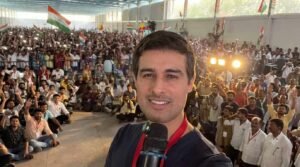
The SIR voter-list exercise has triggered protests and a wider political debate, with Opposition leaders, citizen groups and public figures questioning the process while the Election Commission defends the revision. Opposition leaders, youth groups and public figures have raised questions about the process, while the Election Commission has defended the revision. Dhruv Rathee also joined the Bengaluru protest on October 8.
The Gyanesh Kumar row has grown into a wider debate over voter lists, the Election Commission’s Special Intensive Revision (SIR) and public confidence in India’s electoral system. The controversy has moved beyond political parties, with YouTuber Dhruv Rathee and actor-activist Prakash Raj joining a Bengaluru protest against the SIR process.
At the heart of the dispute is a simple question: how can electoral rolls be updated without leaving eligible voters out? The Election Commission and government maintain that SIR is meant to keep voter lists accurate, while Opposition parties and protest organisers have raised concerns about voter exclusions and transparency.
What is the SIR voter-list exercise?
The Election Commission’s Special Intensive Revision is an exercise to examine and update electoral rolls. It can identify entries relating to deceased voters, people who have permanently shifted, duplicate names and other entries that may no longer be valid.
The process also allows eligible citizens to seek inclusion if their names are missing from the electoral roll.
The current SIR exercise has become a major political issue because of its scale. Around 13 crore names were not included in draft electoral rolls across 30 states and Union Territories during the exercise.
However, this figure does not mean that 13 crore eligible voters have permanently lost their voting rights. The names were not included in the draft rolls, and the process provides avenues for claims, objections, correction and fresh enrolment.
This distinction is important because the draft stage allows authorities and voters to identify and correct errors before the electoral rolls are finalised.
Why are Opposition parties demanding Gyanesh Kumar’s resignation?
INDIA bloc parties have made Chief Election Commissioner Gyanesh Kumar’s resignation one of their demands during protests over SIR.
Opposition leaders have questioned the Election Commission’s handling of the voter-list revision and alleged that the process could exclude eligible voters. They have also raised concerns about voter-roll management and aspects of the technology involved in the exercise.
Rahul Gandhi, Priyanka Gandhi Vadra and other Opposition leaders have participated in demonstrations in Delhi. Some leaders were detained during protests connected with the issue.
These are political allegations and demands. They do not by themselves establish that the Election Commission deliberately removed eligible voters from electoral rolls.
Why did Dhruv Rathee join the Bengaluru SIR protest?
Dhruv Rathee joined a CJP-organised protest at Freedom Park in Bengaluru on October 8. He appeared alongside Prakash Raj and CJP founder Abhijeet Dipke at a people’s tribunal linked to concerns over the SIR exercise.
Rathee had been announced as a surprise participant before the demonstration. During the protest, he criticised what he described as a lack of transparency and accountability in the electoral-roll process. He also said that his participation was not aimed at regime change.
His participation has brought additional public attention to the Bengaluru demonstration because of his large online audience and regular commentary on political and public-policy issues.
However, Rathee’s participation does not independently establish the allegations raised against the Election Commission.
Prakash Raj also participated in the protest, where demonstrators demanded that the SIR exercise be scrapped and that Gyanesh Kumar resign.
Who else is raising concerns over SIR?
The protests have expanded beyond established political parties.
In Bengaluru, the CJP organised a people’s tribunal at Freedom Park where women, students and other participants shared concerns about the SIR exercise. Protesters questioned the deletion of names and called for greater accountability.
Student and youth groups have also joined the wider campaign, while another demonstration has been planned in Delhi.
At the political level, INDIA bloc parties have continued demonstrations in Delhi, with Opposition leaders demanding Gyanesh Kumar’s resignation. Some protests have involved attempts to march towards designated locations, leading to police intervention and detentions.
The current movement therefore includes Opposition parties, citizens raising concerns about voter-list exclusions and youth groups using public demonstrations and social media to draw attention to the issue.
What does the Election Commission say?
The Election Commission has defended SIR as part of its responsibility to maintain electoral rolls. Its position is that voter lists need regular verification so that duplicate, deceased, shifted or otherwise ineligible entries do not remain on the rolls.
The authorities have also pointed to mechanisms available to eligible voters, including claims, objections and fresh enrolment.
Amid the controversy, the Election Commission ordered a special drive in states and Union Territories where SIR had already been completed. The drive is intended to help enrol eligible voters who may have been left out, including young and first-time voters.
This provides a mechanism for addressing some of the concerns surrounding voter-list exclusions.
What does being left out of the draft roll mean?
Not appearing in a draft electoral roll does not automatically mean that a person has permanently lost the right to vote.
The draft stage allows electoral authorities and voters to identify errors and make corrections. Eligible people whose names are missing can use the prescribed process for claims, objections or enrolment.
This is why the difference between not appearing in a draft roll and being permanently excluded from the electoral roll matters.
For voters, checking their electoral details and using the available correction or enrolment process can be more immediately useful than relying only on the wider political debate.
Why does the SIR controversy matter?
The controversy has turned voter-list revision from an administrative exercise into a wider discussion about electoral transparency and public confidence.
For the Election Commission, the challenge is to maintain accurate rolls while ensuring that eligible citizens have a clear opportunity to remain included. For political parties and citizen groups, the central concern is whether the process offers enough transparency and safeguards against wrongful exclusion.
The issue also affects ordinary voters directly. A person whose name is missing from the electoral roll needs to know how to seek inclusion or correction rather than assume that the omission is permanent.
What happens next?
The dispute is likely to remain focused on electoral rolls, claims, objections and requests for inclusion.
The Election Commission has already directed a special enrolment drive in states and Union Territories where SIR has been completed. Political parties and citizen groups, meanwhile, continue to demand greater transparency and accountability.
The wider Gyanesh Kumar row will therefore depend not only on political protests but also on how disputed voter names are examined and how eligible citizens are given opportunities to correct or restore their entries.
For voters, the practical step is to check their electoral-roll status and use the available correction or enrolment mechanisms if their details are missing or incorrect. The political debate over SIR may continue, but the handling of individual voter records will remain central to the issue.

