
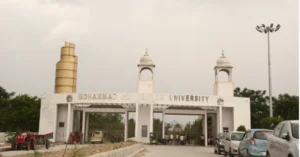
From an ambitious private university in Rampur to a prolonged legal and political dispute, here’s a detailed look at how Jauhar University evolved and why it continues to attract national attention.
The Jauhar University controversy has turned one of Uttar Pradesh’s best-known private universities into the subject of political and legal debate. While recent developments have centred on legal proceedings over demolition notices and campus buildings, the story stretches back nearly two decades and involves education, politics, land acquisition and court battles.
Established with the vision of creating a modern educational institution in Rampur, Mohammad Ali Jauhar University has expanded into a multi-disciplinary campus offering professional and higher education. At the same time, it has remained under scrutiny because of allegations related to land acquisition and construction approvals, leading to multiple legal proceedings over the years.
As the institution continues to make headlines, here is everything readers need to know about the Jauhar University controversy, its background and why it remains significant.
What is Mohammad Ali Jauhar University?
Mohammad Ali Jauhar University is a private university located in Rampur, Uttar Pradesh. It was established in 2006 by the Mohammad Ali Jauhar Trust and later received university status in 2012. The institution also obtained minority institution status from the National Commission for Minority Educational Institutions in 2013. The university received university status in 2012 and is recognised by the University Grants Commission (UGC).
Named after freedom fighter and journalist Maulana Mohammad Ali Jauhar, the university was envisioned as a centre for higher education serving students from different parts of the country. The campus offers programmes in medicine, engineering, pharmacy, law, management, education, humanities and several other disciplines.
How did the university originate?
The idea of establishing an Urdu-focused university in Rampur emerged in the early 2000s. Initially, there were proposals for a state-supported institution. However, those plans did not materialise after disagreements over its governance and structure.
Following that, senior Samajwadi Party leader Azam Khan pursued the project through a private trust. The university was eventually established in 2006 and gradually developed into a large residential campus with academic buildings, hostels, hospitals and sports facilities.
Supporters viewed it as a major educational investment in western Uttar Pradesh, while critics questioned various aspects of its development from the very beginning.
Why is the Jauhar University controversy back in the news?
The latest attention around the Jauhar University controversy stems from action initiated by the Rampur Development Authority (RDA). The Rampur Development Authority issued demolition orders covering 38 buildings after alleging that they were constructed without approved building plans.
According to the authority, only a limited number of buildings had received the required approvals, while several others allegedly violated planning regulations.
The issue soon triggered protests by students, political reactions from opposition parties and fresh legal proceedings.
In a significant development, the Moradabad Divisional Commissioner’s court later granted interim relief by staying the proposed demolition of 38 buildings until further consideration of the case.
Why has the university faced legal disputes?
The legal disputes surrounding Mohammad Ali Jauhar University are not new.
Over the years, multiple investigations and cases have examined allegations related to land acquisition, property ownership and construction permissions associated with the university campus. Various government agencies have investigated different aspects of these allegations, while university representatives have consistently challenged several actions before courts.
The present demolition dispute is primarily linked to building approval issues raised by the development authority rather than the academic functioning of the institution itself. The legal process remains ongoing, with courts examining the competing claims made by both sides.
Student concerns during the controversy
One of the biggest concerns arising from the Jauhar University controversy has been its impact on students.
Students organised peaceful demonstrations after demolition notices were issued, arguing that any large-scale action could disrupt their education and affect thousands enrolled in different programmes. Reports indicate that many students requested authorities to protect their academic future while the legal proceedings continue.
The university administration has also maintained that academic activities should not suffer because of ongoing legal disputes.
Political reactions have intensified the debate
Like many high-profile issues in Uttar Pradesh, the university dispute has generated strong political responses.
Leaders from the Samajwadi Party have alleged that the action is politically motivated, while the state government has maintained that authorities are enforcing planning and development laws.
Several opposition leaders visited the campus during student protests, whereas Bahujan Samaj Party chief Mayawati welcomed the decision to halt demolition temporarily and said legal procedures should be followed fairly.
These contrasting reactions have ensured that the Jauhar University controversy remains part of the wider political conversation in the state.
What happens next?
The future of the university now depends largely on the outcome of ongoing legal proceedings.
The interim stay on demolition provides temporary relief, but the final decision will depend on judicial examination of planning approvals, construction records and related legal questions. Until then, academic activities and legal proceedings are expected to continue simultaneously.
Why this story matters
The Jauhar University controversy goes beyond a dispute over buildings. The case has drawn attention because it involves an educational institution, planning regulations and ongoing legal proceedings that could affect students and the university’s future.
For students, the priority remains uninterrupted education. For authorities, the issue centres on enforcement of planning regulations. For courts, the focus is on determining whether administrative actions comply with legal requirements.
As the case progresses, Mohammad Ali Jauhar University is likely to remain one of the most closely watched educational institutions in Uttar Pradesh.
You may want to know:
What is the Jauhar University controversy?
The controversy relates to legal disputes involving land, construction approvals and demolition notices issued for several buildings on the Mohammad Ali Jauhar University campus in Rampur.
Who founded Mohammad Ali Jauhar University?
The university was established in 2006 by the Mohammad Ali Jauhar Trust, led by senior Samajwadi Party leader Azam Khan.
Is Jauhar University recognised by the UGC?
Yes. The university is recognised by the University Grants Commission and received university status in 2012.
Why were demolition notices issued?
The Rampur Development Authority alleged that several university buildings were constructed without approved building plans.
Has the demolition started?
No. The proposed demolition of 38 buildings has been temporarily stayed by the Moradabad Divisional Commissioner’s court while the matter remains under legal consideration.

