
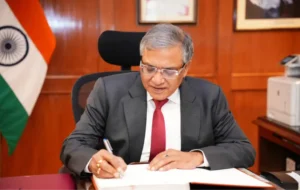
The ECI SIR controversy began after reports that Election Commissioners Sukhbir Singh Sandhu and Vivek Joshi raised objections over several electoral-roll decisions, including voter registration, deletion and access to voter data. The ECI, led by Chief Election Commissioner Gyanesh Kumar, says such differences are part of internal deliberations and that final decisions were unanimous.
The Election Commission of India is facing fresh questions over how some electoral-roll decisions were handled that has led to the ECI SIR controversy. A report has detailed repeated objections recorded by two Election Commissioners over the past 10 months.
The development comes as the poll panel continues the Special Intensive Revision (SIR) of electoral rolls. The exercise has already faced questions over voter verification, notices and data handling.
The Supreme Court is also examining the Delhi SIR process. On September 22, it questioned the way notices were issued to voters flagged for “logical discrepancies”.
What is the ECI SIR controversy about?
The ECI SIR controversy centres on reported differences within the three-member Election Commission.
Election Commissioners Sukhbir Singh Sandhu and Vivek Joshi reportedly raised objections on several electoral-roll and voter-data decisions.
According to a September 23 report, the two commissioners recorded objections at least 14 times over 10 months. Four objections were reportedly made on the same day.
The issues included voter registration, deletion and restoration of names. They also covered appeals linked to electoral-roll decisions and access to voter-data systems.
One reported issue involved Form 6, which is used to apply for inclusion in the electoral roll.
The ECI has rejected the suggestion that these observations show a final split within the Commission.
What has the Election Commission said?
The ECI says internal differences do not necessarily indicate a disagreement over the final decision.
The Commission said written notes, questions and technical suggestions are part of its normal working process. Members can seek clarification or suggest changes before a decision is finalised.
The ECI also said that selected observations cannot be viewed separately from its wider work.
It said around 40 initiatives and several electoral reforms were undertaken during the past year. The Commission maintains that decisions taken by the full panel, including those related to SIR, were unanimous.What did Rahul Gandhi and other Opposition leaders say?
The reported objections within the ECI quickly triggered a political response. On September 23, Rahul Gandhi posted on X, linking the issue to his broader “vote chori” allegations. He accused the BJP, RSS and Election Commission of an attack on the Constitution and called it “treason”.
Other Opposition leaders also demanded action. Congress leaders called for Chief Election Commissioner Gyanesh Kumar’s removal, while leaders from the Samajwadi Party, CPI(M), AAP, TMC and Shiv Sena (UBT) questioned the functioning of the poll panel and sought further scrutiny or a probe.
These are political allegations and demands. The ECI has rejected claims of a final split and said its decisions were unanimous.
What were the reported objections about?
The reported objections covered several areas of electoral administration. They were not limited to SIR.
Form 6 and voter registration
One issue involved Form 6.
The report said a declaration was added to the form during the SIR process. It asked applicants whether their own name, or that of a parent or grandparent, appeared in an earlier electoral roll.
Vivek Joshi reportedly objected to the change. He argued that a statutory form could not be changed without amending the relevant rules.
Sukhbir Singh Sandhu later supported the objection. He reportedly described the change as unauthorised and illegal.
These were the reported positions of the commissioners. They do not amount to a judicial finding.
Access to voter databases
Another reported concern involved access to electoral-roll databases.
The objections questioned whether officials handling electoral rolls had adequate access to the systems needed for their work.
The ECI has maintained that Electoral Registration Officers and District Election Officers exercise their legal powers relating to voter registration and deletion under the law.
Why has SIR become a major issue?
Special Intensive Revision, or SIR, is used to verify and update electoral rolls.
The ECI says the exercise aims to keep eligible voters on the rolls and remove ineligible entries.
The process can involve checking existing records and seeking further information where verification is required.
SIR has attracted scrutiny over documentation, verification, voter notices and electoral data.
For voters, the main concern is simple. Their names and details should be correctly reflected in the electoral roll. There should also be a process to address discrepancies.
What is the latest Delhi SIR development?
The Delhi SIR process is facing separate scrutiny in the Supreme Court.
On September 22, the Court questioned the process used to issue notices to voters identified through “logical discrepancies” in electoral data.
The Court sought an explanation from the ECI. It also questioned whether some notices had been issued almost mechanically.
Reports put the number of notices at more than 33 lakh.
The notices relate to discrepancies identified during the electoral-roll revision process.
The Delhi proceedings are separate from the reported objections raised by Sandhu and Joshi. Both developments, however, concern the wider SIR process.
Did the election commissioners disagree with final SIR decisions?
This is an important part of the ECI SIR controversy.
The reported objections show that Sandhu and Joshi raised concerns during internal deliberations.
The ECI has given a different context to these objections. It says members can raise questions or record observations before a final decision is taken.
The Commission maintains that final decisions of the full panel over the past year were unanimous. This includes decisions relating to SIR.
So, there are two positions to consider. Reports have documented objections by two commissioners. The ECI says those objections were part of the normal deliberation process and did not change the final decisions.
What has the ECI said about ECINET and voter data?
The Commission has also responded to concerns about its digital systems.
The ECI said platforms such as ECINET use data-security protocols. It said these are intended to prevent unauthorised tampering or manipulation.
The Commission also referred to IT security checks and audit controls.
It has further said that statutory officials retain their legal powers over voter registration and deletion.
Why does SIR matter to voters?
Electoral-roll revision can directly affect a person’s ability to vote.
During SIR, some voter records may require additional verification. A notice may be issued when a record needs clarification.
The voter can then follow the applicable process to establish or verify the relevant details.
The key issue is accurate electoral information. Voters also need a clear way to correct or challenge records when discrepancies arise.
ECI SIR controversy in five key points
| Issue | What is known |
| Reported objections | Sandhu and Joshi reportedly raised objections at least 14 times over 10 months. |
| ECI response | The Commission says internal notes and differing views are part of normal deliberations. |
| Final decisions | The ECI maintains that final decisions of the full Commission were unanimous. |
| Delhi SIR | The Supreme Court has questioned the process used to issue notices based on “logical discrepancies”. |
| Voter data | The ECI says its digital systems use security protocols and audit controls. |
What happens next?
The ECI SIR controversy now has three strands: reported objections within the poll panel, the ECI’s response to those reports, and political Opposition demands for greater scrutiny of the Commission.
The ECI has defended its decision-making process. The Supreme Court’s questions will continue to bring attention to how voter records are being verified.
For voters, the practical issue remains the same: accurate electoral rolls and a clear process to verify, correct or challenge voter records when needed.
Also read: What is changing at IIT Bombay after Sahil Wakode’s death? Ceiling fans, welfare reforms explained

