
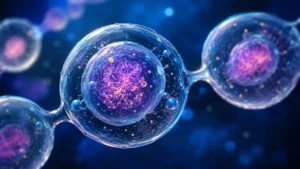
Researchers at the University of Minnesota say the laboratory-built SpudCell can absorb nutrients, grow, replicate its DNA and divide under controlled laboratory conditions, although it is not considered a living organism.
Researchers at the University of Minnesota have announced the development of what they describe as the first synthetic cell capable of completing a full life cycle. Named SpudCell, the laboratory-built system can absorb nutrients, grow, replicate its DNA and divide into daughter cells while being assembled from non-living chemical components.
The research marks an important step in synthetic biology, a field focused on designing and building biological systems with specific functions. However, the research team emphasizes that SpudCell should not be regarded as a living organism because it still relies on carefully controlled laboratory conditions and externally supplied biological machinery to perform essential functions.
How was SpudCell- the first synthetic cell created?
Unlike conventional synthetic biology projects that modify existing bacteria or living cells, SpudCell was assembled using non-living chemical components. Researchers enclosed a synthetic DNA genome inside lipid membranes, creating simplified cell-like compartments capable of carrying out several biological processes.
To support growth, the artificial cells merge with specially designed nutrient-rich feeder compartments. These compartments provide proteins, enzymes and ribosomes that enable the synthetic cells to manufacture proteins, replicate their DNA and eventually divide.
According to the research team, every gene included in the synthetic genome has a known biological function in this first synthetic cell. This allows scientists to better understand how each component contributes to cellular behaviour while providing a simpler platform than naturally occurring organisms, whose genomes often contain genes that remain poorly understood.
Why researchers say it is not a living organism
Although SpudCell displays several characteristics commonly associated with living cells, researchers say it does not meet the criteria for independent life.
The synthetic cells depend on externally supplied biological materials and highly controlled laboratory environments to function. They are also unable to sustain long-term independent growth or undergo continuous evolution in the way naturally occurring organisms do.
Because of these limitations, the research team says the achievement should be viewed as a platform for studying the fundamental processes of life rather than the creation of artificial life.
Why the research matters
Scientists believe programmable synthetic cells could become valuable tools for biological research by allowing experiments that are difficult to perform using naturally occurring organisms.
Researchers say the technology could support future work in several areas, including:
- Developing targeted therapeutic systems
- Studying how cells grow and divide
- Producing complex biological molecules
- Advancing industrial biotechnology
- Exploring questions related to the origin of life
The researchers also say simplified synthetic cells could help scientists better understand how individual genes contribute to biological functions because every component of the system has been intentionally designed.
The first synthetic cell: A platform for future synthetic biology research
The University of Minnesota team says the project is intended to serve as a foundation for broader collaboration in synthetic cell engineering. Researchers hope that making the technology more accessible will encourage scientists worldwide to build on the platform and explore new biological applications.
While significant scientific challenges remain before synthetic cells can function independently, the study demonstrates that several essential cellular processes can be recreated using carefully designed non-living components.
Researchers say future work will focus on improving the cells’ ability to generate energy, maintain themselves over longer periods and perform increasingly complex biological functions without relying as heavily on external laboratory support.
A step forward in understanding life
Scientists describe SpudCell as an important research platform rather than artificial life. By recreating key stages of the first synthetic cell cycle in a simplified synthetic system, researchers hope to better understand how living cells function and to develop new technologies that may benefit medicine, biotechnology and basic biological research in the years ahead.
Also read: BAT-BMS App misuse exposes security loopholes in e-rickshaw battery systems, learn how.

