
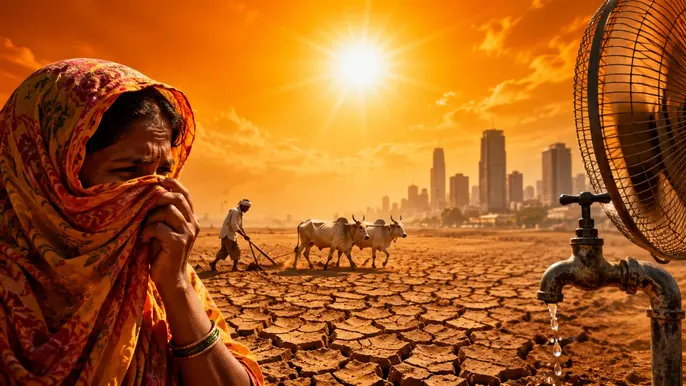
A looming weather pattern is threatening to trigger severe weather disruptions across the country, with experts warning of intensified heatwaves and potential shifts in seasonal rainfall patterns. Media reports indicate that a major surge in temperatures is sweeping across multiple regions, raising immediate health and economic concerns.
Weather office issues critical temperature warnings
The weather office has signaled an early and unforgiving transition into extreme summer conditions. Major cities and states—including Delhi, Rajasthan, Uttar Pradesh, Telangana, and Madhya Pradesh—have already begun recording temperatures climbing past the 40 degrees Celsius mark, with several areas peaking as high as 44 degrees Celsius. According to official meteorological criteria, the sudden spike sits roughly 4 to 7 degrees above normal seasonal averages, solidifying the onset of an official heatwave.
In response to the blistering conditions, local administrative bodies are adjusting school schedules, altering general timings, and declaring early holidays to safeguard students from prolonged exposure to extreme weather. Furthermore, coastal and urban pockets like Chennai are experiencing severe indoor heat, with studies indicating residential indoor temperatures frequently cross 32 degrees Celsius, giving citizens little relief even when inside their homes.
Infrastructure vulnerability and power grid strains
The relentless temperature surge is placing unprecedented operational stress on national infrastructure and public utilities. As households and commercial spaces run air conditioners continuously to combat ambient temperatures, electricity demand has spiked to historical highs across urban corridors. Power distribution companies are facing localized grid overloads, leading to forced load shedding and intermittent blackouts in several suburban zones. Municipal authorities warn that without immediate upgrades to power transmission lines and neighborhood transformers, peak summer demand could cause severe grid instability, disrupting essential services such as municipal water pumping stations and hospital cooling facilities.
The super El Nino threat and economic implications
Compounding the immediate crisis is the projected development of a “super El Nino” expected to take hold later this year. When combined with long-term climate change dynamics, this major oceanic warming trend acts as a primary catalyst for record-breaking global and local weather anomalies.
The phenomenon carries significant downside risks for India’s crucial agricultural sector and overall economic stability. Initial long-period forecasts imply a weaker-than-average monsoon, causing immense anxiety over regional water security. In major metropolitan hubs like Mumbai, civic bodies have proactively implemented or planned water cuts of up to 10 percent to counter the precipitation deficit driven by the weather pattern.
The cascading impact of water scarcity and erratic weather has also captured the attention of fiscal policymakers. Financial experts note that the overlapping threats of global conflicts and the impending weather disruptions are driving up inflation risks. Consequently, the central bank has chosen to hold its benchmark repo rate steady to manage fluctuating market uncertainties.
Agricultural vulnerability and supply chain disruptions
The combined pressures of rising heat and delayed seasonal rains are casting a heavy shadow over agricultural production. Farmers across key belts are reporting early crop dehydration, reduced soil moisture levels, and shortened sowing windows for essential food grains, oilseeds, and pulses. Perishable produce like fruits and vegetables is suffering higher post-harvest loss rates due to inadequate cold-storage transport facilities along major highway routes. Agricultural economists warn that if dry spells persist, reduced yields will trigger localized food supply shortages, driving up wholesale mandi prices and placing extra financial pressure on lower-income households.
Public health departments activate emergency measures
With the health ministry warning of intense heat periods continuing through June, public healthcare infrastructure is shifting into high gear. Doctors warn that prolonged extreme heat directly challenges respiratory health, impacts oxygen absorption levels, and induces severe airway inflammation. Furthermore, persistently high nighttime temperatures mean human bodies struggle to cool down and recover naturally, triggering widespread fatigue, dehydration, and heat-induced insomnia.
Policy interventions and municipal action plans
In light of escalating climate risks, urban local bodies are accelerating the deployment of localized Heat Action Plans (HAPs). Major municipalities are establishing shaded transit hubs, distributing free water pouches at busy traffic intersections, and painting public building roofs with solar-reflective white paint to lower urban heat island effects. Simultaneously, environmental ministries are urging corporate offices and industrial units to adopt staggered work hours to protect outdoor laborers from peak afternoon sun. These systemic policy adjustments highlight how climate adaptation is transitioning from long-term planning into an immediate, daily operational necessity.
State governments are actively preparing by establishing specialized heatstroke units, ensuring ample stocks of Oral Rehydration Salts (ORS), and rolling out advisory guidelines. Citizens are being strictly urged by medical professionals to remain hydrated, limit outdoor exposure during peak daylight hours, and prioritize reliable cooling measures to combat the extreme climate risks.
👉 Explore more latest updates, trending news, and expert insights on WizBloggers

